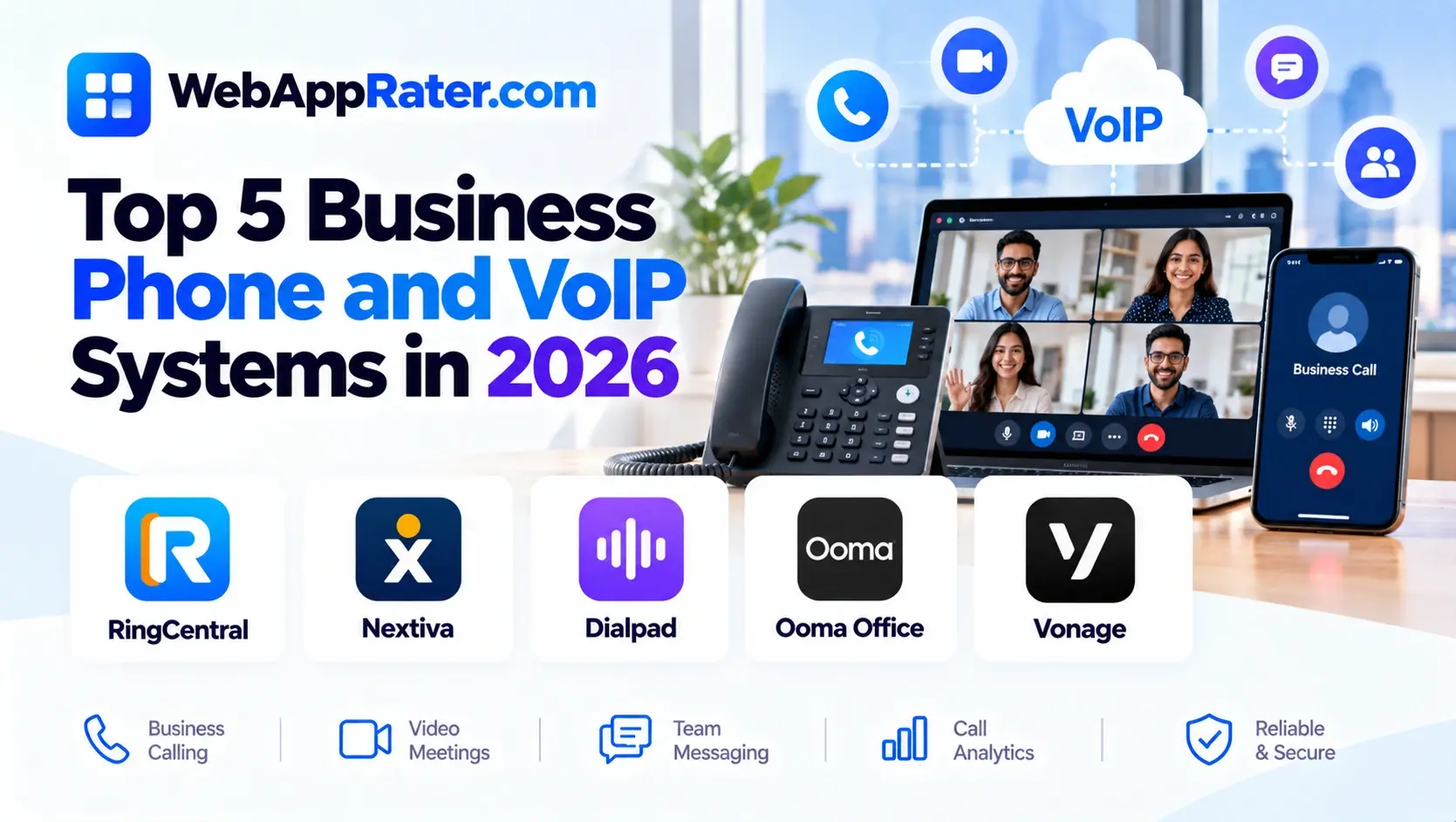
A traditional landline phone system remains genuinely expensive, inflexible, and poorly suited to a distributed or remote workforce, and cloud-based VoIP systems have matured into the clear default for businesses of virtually every size. These platforms route calls over the internet rather than a physical phone line, letting employees answer a business number from a laptop, mobile app, or desk phone interchangeably, often bundled with video conferencing, SMS, and call analytics in the same subscription. Here are five platforms worth knowing in 2026.
RingCentral
RingCentral remains one of the most comprehensive unified communications platforms available, bundling voice calling, video conferencing, and team messaging into a single subscription rather than requiring separate tools for each function. Its AI-powered call summaries and sentiment analysis give managers genuinely useful insight into call quality and customer interactions without needing to manually review every recording. For companies that want a single, all-in-one communications platform covering phone, video, and chat under one vendor relationship, it remains one of the most complete options in the category.


Nextiva
Nextiva has built a strong reputation specifically for reliability and customer support quality, consistently ranking well in independent uptime and support satisfaction comparisons, a genuinely important consideration for a system a business depends on for every incoming customer call. Its built-in CRM-style contact management gives sales and support teams useful customer context directly within the calling interface, removing the need to switch between a separate CRM and the phone system during a live call. For businesses that specifically prioritize dependable uptime and responsive support over the absolute deepest feature set, it remains a strong, trusted choice.
Dialpad
Dialpad has positioned itself as the most AI-forward option in the category, using real-time AI transcription and coaching that gives sales reps live suggestions during an active call, and automatically generating action items and follow-up tasks once a call ends. Its Voice Intelligence engine analyzes call sentiment and flags competitor mentions or specific keywords in real time, giving sales and support managers genuinely actionable coaching data without needing to review recordings after the fact. For companies specifically wanting the deepest AI-driven call analytics and live coaching capability, it remains one of the most technically advanced options available.
Ooma Office
Ooma Office remains the strongest choice specifically for small businesses on a tight budget, offering a genuinely affordable, straightforward VoIP setup without the enterprise-scale feature bloat that larger platforms carry. Its virtual receptionist feature handles basic call routing without requiring a paid human receptionist, and its simple, transparent pricing structure avoids the more complex, add-on-heavy pricing tiers common among larger competitors. For small businesses and solo entrepreneurs who mainly need reliable, professional call handling without needing advanced call center features, it remains one of the most accessible options in the category.
Vonage Business Communications rounds out a strong fifth option specifically for companies that want deep API access to build custom calling and messaging functionality directly into their own existing software, appealing to technically capable teams that want VoIP infrastructure they can extend programmatically rather than relying purely on off-the-shelf features. Choosing between these platforms mostly comes down to company size and specific priorities: businesses wanting an all-in-one communications suite should default to RingCentral, companies prioritizing reliability and support should consider Nextiva, sales-heavy teams wanting AI-driven coaching should evaluate Dialpad, and small businesses on a tight budget should start with Ooma Office.
Conclusion
Cloud-based VoIP systems have become genuine infrastructure for any business that wants professional, flexible phone handling without the cost and rigidity of a traditional landline system. Whichever of these five ends up fitting a company’s size and priorities, the underlying payoff remains consistent: a phone system that actually moves with a distributed team rather than tying communication to a single physical office.