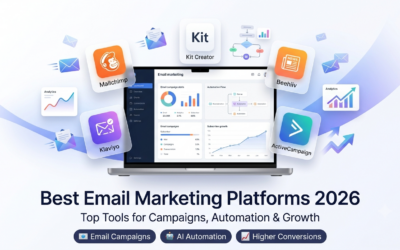
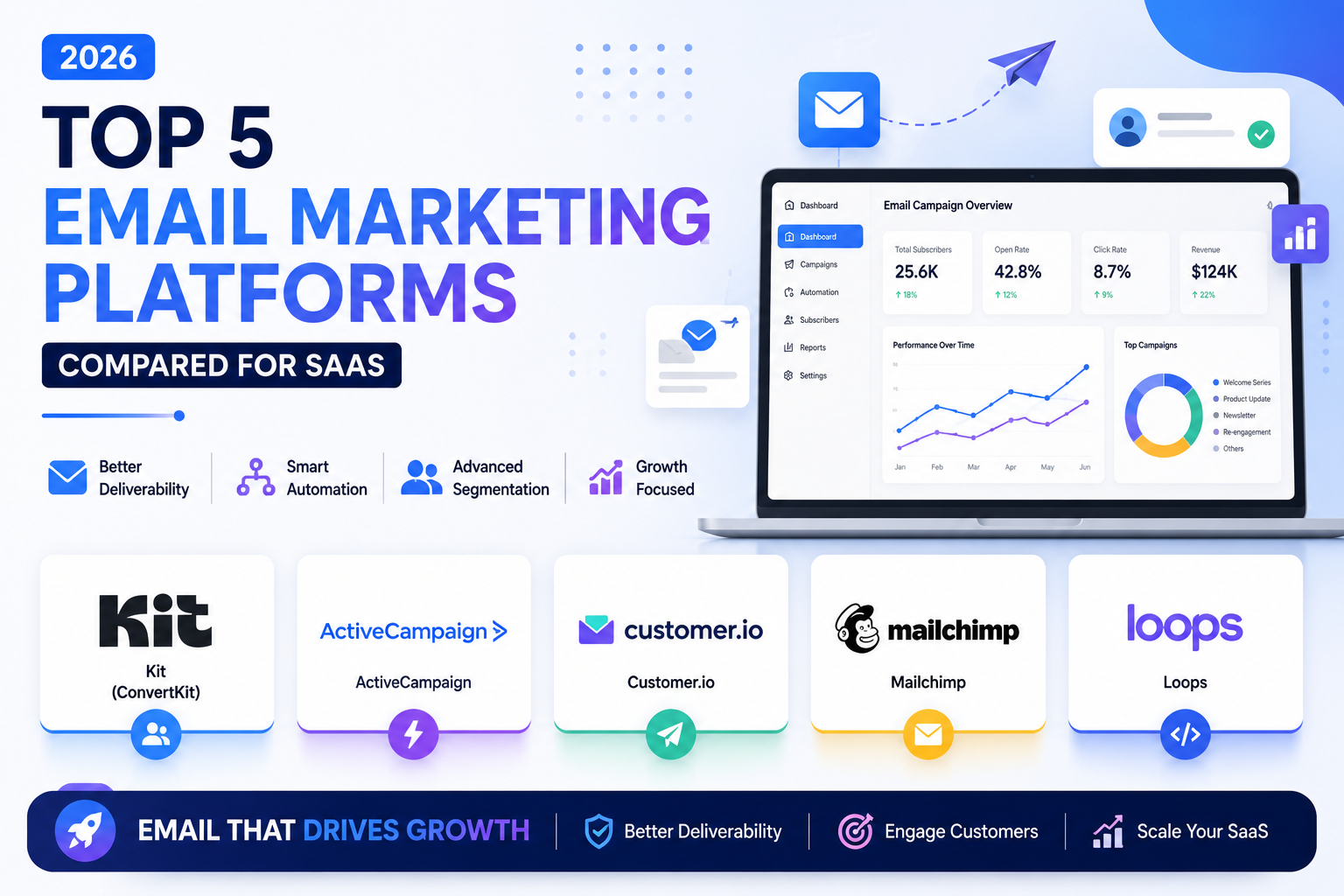
Email remains one of the highest-return marketing channels a SaaS company has, but only if the platform behind it handles deliverability, automation, and segmentation properly at scale. Picking the wrong tool early on tends to cause real pain later, migrating a large subscriber list and rebuilding automation flows from scratch is a genuinely painful project most growing teams try to avoid at all costs. The right platform should grow alongside your company rather than becoming something you outgrow within a year of signing up. Here are five email marketing platforms worth considering for SaaS businesses in 2026, each with a slightly different strength depending on where your company is in its growth.
ConvertKit (Kit)
Kit has built a strong reputation among creators and smaller SaaS teams for its clean automation builder and straightforward tag-based segmentation, which tends to be easier to reason about than more complex list-based systems. Its landing page and form builder also make it useful beyond just email alone.
ActiveCampaign
ActiveCampaign offers some of the deepest automation logic in this category, letting SaaS teams build genuinely sophisticated lifecycle campaigns based on in-app behavior once properly integrated. The learning curve is steeper than simpler tools, but the payoff in targeting precision is real for teams that invest the setup time.
Customer.io
Customer.io was built specifically with product-led SaaS companies in mind, making it straightforward to trigger emails directly off product usage events rather than just list membership. It’s a strong pick once your onboarding and retention emails need to respond to actual in-app behavior.
Mailchimp
Mailchimp remains a reasonable starting point for very early-stage SaaS teams thanks to its familiar interface and generous free tier, though its automation depth and per-contact pricing tend to become limiting once a company scales past a few thousand subscribers.
Loops
Loops is a newer entrant built specifically for SaaS and developer-facing products, focusing on transactional and lifecycle emails with a simpler setup than legacy platforms. It’s worth watching for teams that want a modern, SaaS-native alternative without the bloat of older all-purpose tools.
Deliverability Matters More Than Feature Lists
It’s easy to get pulled into comparing automation builders and template libraries, but none of that matters if your emails land in spam instead of the inbox. Before committing to any platform, check its shared IP reputation policies, whether dedicated IPs are available at your plan tier, and how proactively the platform handles list hygiene and bounce management on your behalf. SaaS companies in particular need to pay close attention to this, since transactional emails, password resets, billing receipts, failing to deliver can directly damage customer trust in a way that a missed marketing email never would.
The right platform depends heavily on how behavior-driven your email strategy needs to be, a simple newsletter has very different requirements than a full product-led onboarding sequence triggered by in-app events. Smaller teams just getting started are usually fine with Kit or Mailchimp, while companies building serious lifecycle marketing around product usage should look closely at Customer.io or ActiveCampaign before locking in a long-term choice. Whatever you pick, request a trial with your actual subscriber list and automation logic rather than judging based on the demo data alone, real-world testing tends to surface deliverability and workflow issues that a sales demo simply won’t show you. It’s also worth revisiting your choice annually as your subscriber count and feature needs grow, since the right platform at 500 subscribers is rarely still the right one at 50,000.