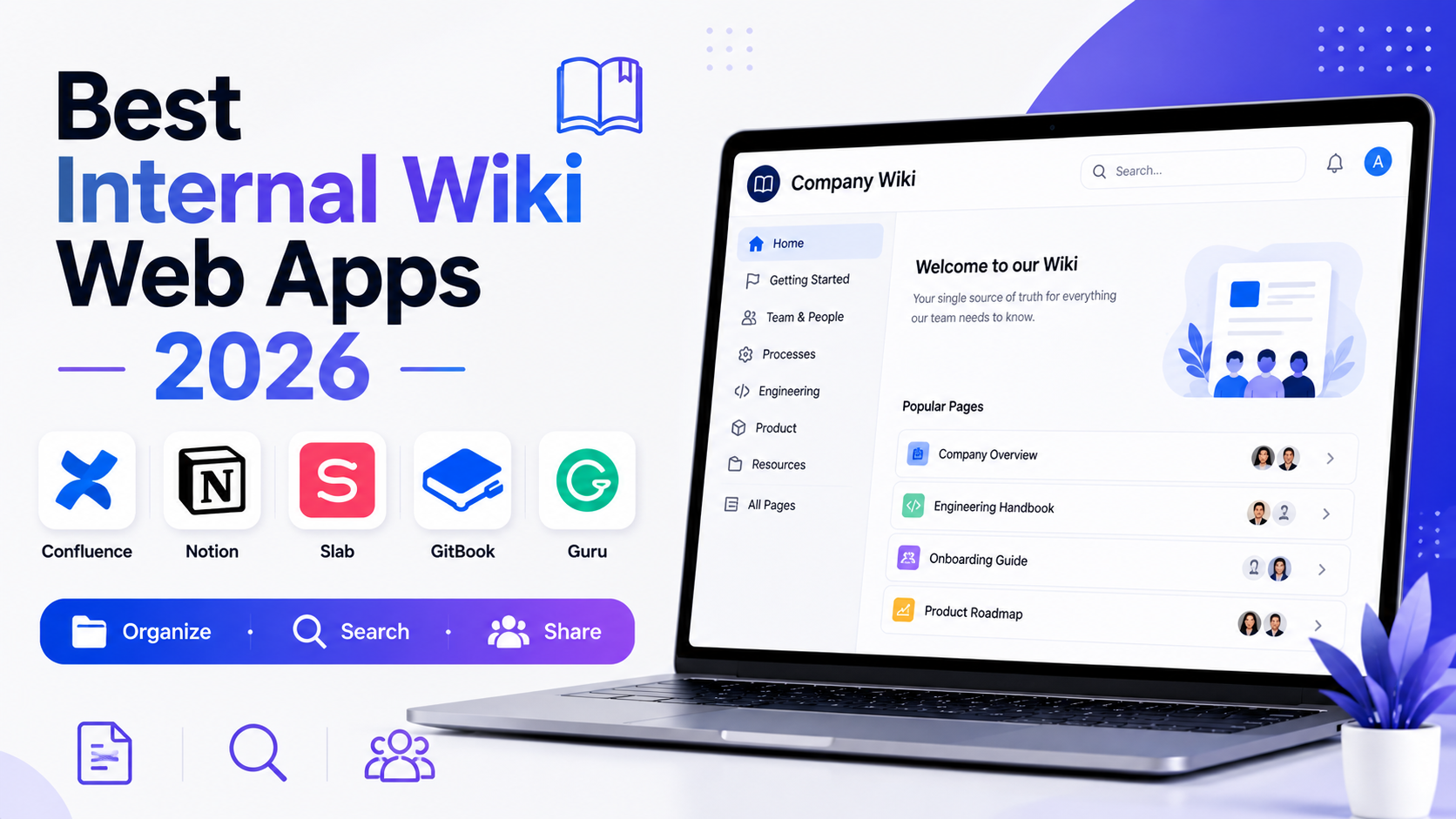
Every growing company eventually hits the point where institutional knowledge, how a process actually works, where a specific decision came from, why a system was built a certain way, lives only in a few people’s heads, creating genuine risk when those people are unavailable or leave. A well-built internal wiki fixes that by giving a team a single, searchable source of truth, but the tool choice matters considerably, since a wiki that’s genuinely painful to update tends to go stale fast regardless of good intentions at launch. Here are five web apps worth considering for building an internal company wiki in 2026.
1. Confluence
Confluence remains the enterprise standard for internal documentation, with genuinely deep permission controls and integration with Jira that makes it a natural fit for larger, more structured engineering organizations already in Atlassian’s ecosystem.
www.atlassian.com/software/confluence
2. Notion

Notion’s flexible database structure makes it genuinely popular for internal wikis at smaller and mid-sized companies, letting teams build documentation that connects naturally to project tracking and other internal systems in the same workspace.
3. Slab

Slab focuses specifically on internal knowledge sharing with a genuinely clean, distraction-free writing experience and strong search, appealing to teams that found Confluence’s broader feature set more complex than they actually needed.
4. GitBook

GitBook appeals particularly to engineering teams wanting documentation that lives closer to their codebase, with genuinely strong version control integration that suits technical documentation workflows specifically.
5. Guru

Guru focuses on genuinely surfacing the right piece of documentation at the right moment, integrating directly into tools like Slack so answers appear in the flow of work rather than requiring a separate wiki search each time.
Why Most Internal Wikis Fail Within a Year
The most common reason internal wikis go stale isn’t the tool, it’s the absence of genuine ownership, without someone specifically responsible for keeping key pages current, documentation tends to reflect how things worked six months ago rather than how they actually work today. Building a lightweight review cadence, even just a quarterly prompt to revisit high-traffic pages, genuinely prevents the slow drift into inaccuracy that eventually makes a team stop trusting the wiki altogether and fall back on asking colleagues directly. It’s also worth making new documentation part of the actual definition of done for significant projects and decisions, rather than a separate task people intend to get to later, since documentation written immediately after a project while details are fresh is consistently more accurate than anything reconstructed from memory months afterward.
The right wiki tool matters less than most teams assume, what genuinely determines whether a company wiki stays useful is the ongoing discipline of actually maintaining it rather than treating the initial setup as a one-time project. Confluence and Notion both offer strong starting points depending on your team’s existing tools, but success ultimately depends on building real habits around keeping the content current rather than the platform choice alone.