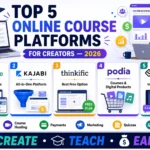
Turning genuine expertise into a structured, sellable online course used to require piecing together separate video hosting, payment processing, and student progress tracking tools manually, a genuinely significant technical barrier for creators who just wanted to teach something they knew well. Online course and LMS platforms have consolidated that entire process into one system, handling video hosting, quizzes, payment collection, and student communication together, letting a creator focus on the actual teaching content rather than the underlying technical infrastructure. In 2026, the strongest platforms in this category have also gotten better at built-in marketing tools, helping creators actually sell a course rather than just host it. Here are five online course platforms worth using this year. Most also support drip-feeding content on a schedule, releasing modules gradually rather than all at once, which tends to improve completion rates compared to dumping an entire course on a student immediately.
Teachable
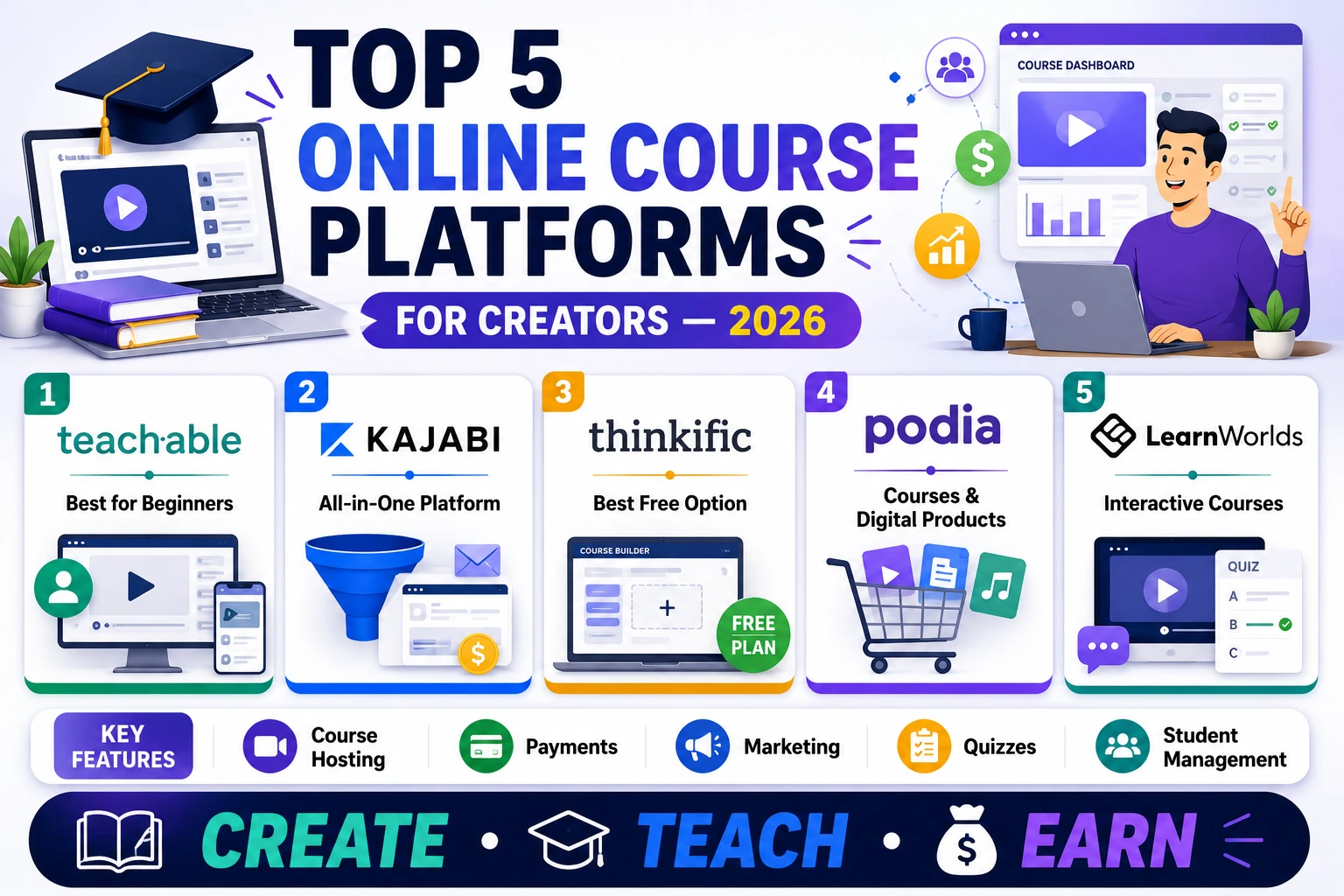
Teachable offers a genuinely approachable course-building experience with solid built-in payment processing and reasonable pricing, making it a comfortable starting point for creators launching their first course without extensive technical experience.
Kajabi
Kajabi bundles course hosting with genuinely comprehensive marketing tools, email campaigns, landing pages, and sales funnels, appealing to creators who want a single all-in-one platform rather than stitching together separate marketing tools.
Thinkific
Thinkific offers a genuinely generous free tier and flexible course structuring options, appealing to creators wanting to test course creation without significant upfront cost before committing to a paid plan.
Podia
Podia combines course hosting with the ability to sell digital downloads and memberships from the same platform, appealing to creators who want multiple revenue streams from one connected storefront rather than separate tools for each product type.
LearnWorlds
LearnWorlds emphasizes genuinely interactive course content, with built-in tools for creating engaging quizzes and interactive video elements that go beyond simple video-and-quiz course structures competitors often default to.
The right platform depends heavily on how much marketing infrastructure a creator actually needs bundled in versus already has elsewhere. Creators just starting out and testing whether course creation is worth pursuing seriously should try Thinkific’s free tier before committing financially to a paid platform. Creators who want comprehensive built-in marketing tools without needing separate email or funnel software get genuine value from Kajabi’s all-in-one approach, even at its higher price point. Creators selling multiple types of digital products, courses, downloads, memberships, benefit from Podia’s flexibility to handle all of it within one storefront. LearnWorlds is worth prioritizing specifically for creators whose subject matter benefits from genuinely interactive elements rather than passive video watching alone, like language learning or hands-on skills. It’s worth checking each platform’s transaction fees closely too, since a seemingly cheaper monthly plan can end up costing more overall once per-sale processing fees are factored into actual revenue at meaningful scale.
The technical barrier that once stood between genuine expertise and a sellable online course has largely disappeared, replaced by platforms that handle hosting, payment, and marketing so a creator can focus on teaching. Match the platform to how much marketing infrastructure you actually need bundled in, and the right course platform turns real knowledge into a genuinely sustainable income stream rather than an idea that never gets off the ground. The hardest part is usually just publishing that first imperfect module rather than endlessly polishing one that never actually ships.