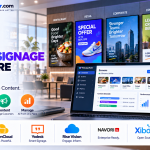
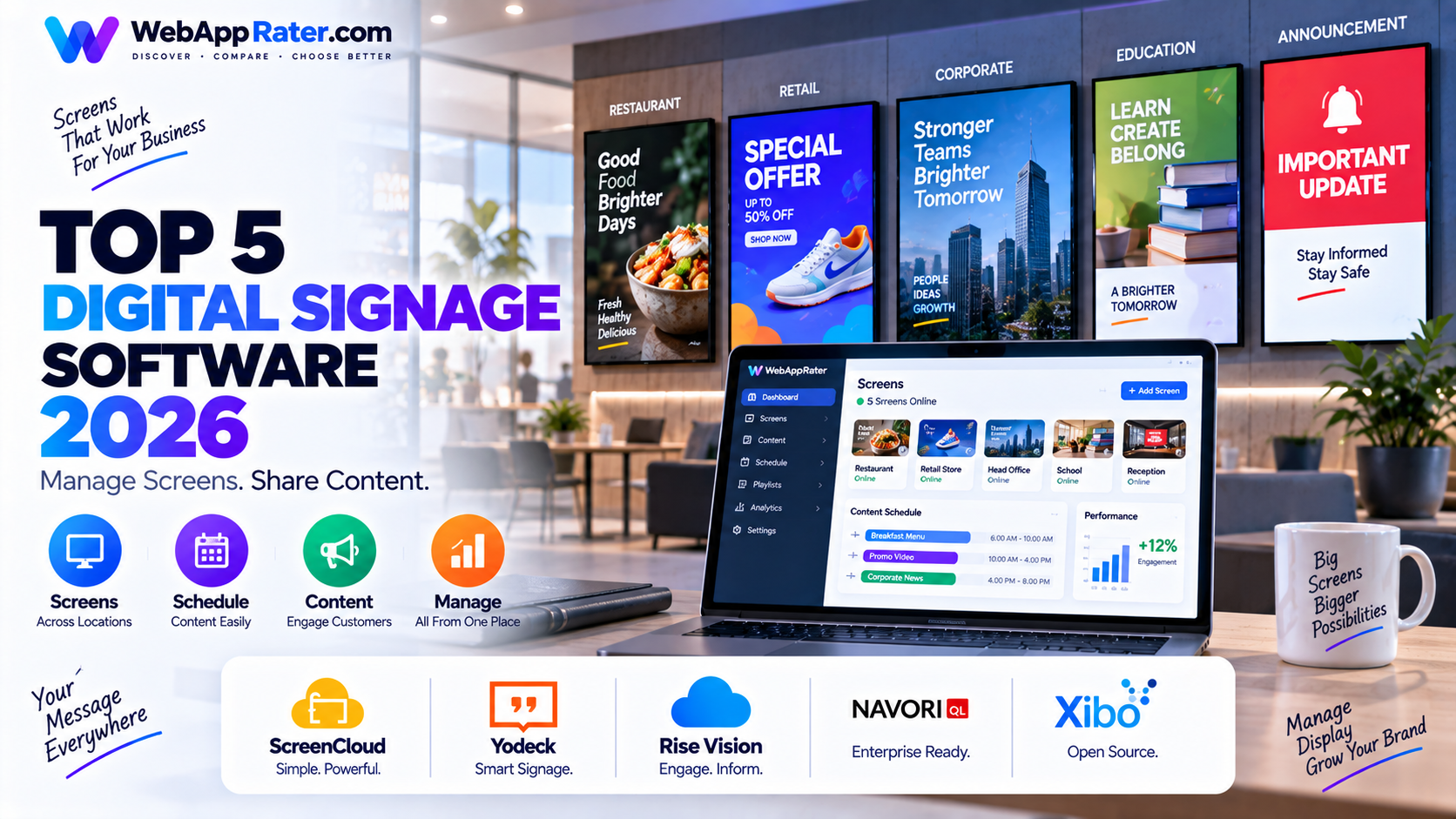
Digital signage software solves a genuinely practical business problem: managing content across one or dozens of displays remotely, updating a menu board, a retail promotion, or a corporate dashboard without ever needing to physically visit each screen. The category has matured into distinct tiers worth understanding, from simple, template-driven platforms for small retail or restaurant use, to enterprise-grade content management systems handling thousands of screens across multiple locations. Here are five platforms worth knowing in 2026.
ScreenCloud
ScreenCloud has built a strong reputation specifically for ease of setup, letting businesses turn virtually any screen with an internet connection into a managed digital sign using an affordable media player or a simple app installed directly on a smart TV. Its extensive app marketplace covers everything from social media feeds to weather widgets to real-time business dashboards, letting non-technical staff assemble a genuinely dynamic display without custom development work. For small to mid-sized businesses that want fast setup and a broad library of ready-made content integrations, it remains one of the most approachable options available.
Yodeck
Yodeck distinguishes itself with a genuinely generous free tier covering up to two screens with full features, making it the strongest starting point for a single-location small business or restaurant testing whether digital signage is worth the investment before committing to a paid plan. Its drag-and-drop content editor and scheduling tools let non-technical users build and time content changes without needing design software, and its dedicated media player hardware simplifies setup for locations without an existing smart display already in place. For budget-conscious businesses managing just a handful of screens, it remains one of the most cost-effective entry points into the category.
Rise Vision
Rise Vision has carved out a particular strength in the education and corporate communications sector, offering purpose-built templates for school announcements, emergency alerts, and internal corporate messaging that go beyond the retail-and-restaurant focus common across much of the category. Its emergency alert integration lets a district or campus push an urgent notification to every connected screen instantly, a genuinely valuable safety feature that most general-purpose signage platforms don’t build in as a core capability. For schools, universities, and corporate offices specifically needing this kind of communication infrastructure, it remains one of the most purpose-built options.
Navori QL
Navori QL targets genuinely large-scale enterprise deployments, offering the sophisticated content scheduling, audience analytics, and centralized management tools needed to coordinate thousands of screens across multiple retail chains or corporate campuses consistently. Its advanced playlist and dayparting capabilities let large organizations run different content at different times of day across an entire fleet of screens from a single management console, without needing separate manual configuration at each location. For large retail chains, transportation hubs, or corporate campuses with genuinely complex, multi-location signage needs, it remains one of the more enterprise-capable platforms in the category.
Xibo rounds out a strong fifth option specifically for technically comfortable teams that want a genuinely free, open-source alternative, giving full control over signage infrastructure without any ongoing licensing cost for organizations willing to self-host and manage the platform themselves. Choosing between these platforms mostly comes down to scale and specific industry need: small businesses and restaurants testing the category should start with Yodeck’s generous free tier, mid-sized businesses wanting broad content integrations should look toward ScreenCloud, schools and corporate communications teams needing emergency alert capability should prioritize Rise Vision, and large multi-location enterprises should evaluate Navori QL for its centralized fleet management depth.
Conclusion
Digital signage software has moved well past simple looping slideshows into genuinely dynamic, remotely managed content platforms that save real time for any business managing more than a single display. Whichever of these five ends up fitting a company’s scale and industry, the underlying payoff remains consistent: updating what’s on a screen from anywhere, without ever needing to physically visit it.