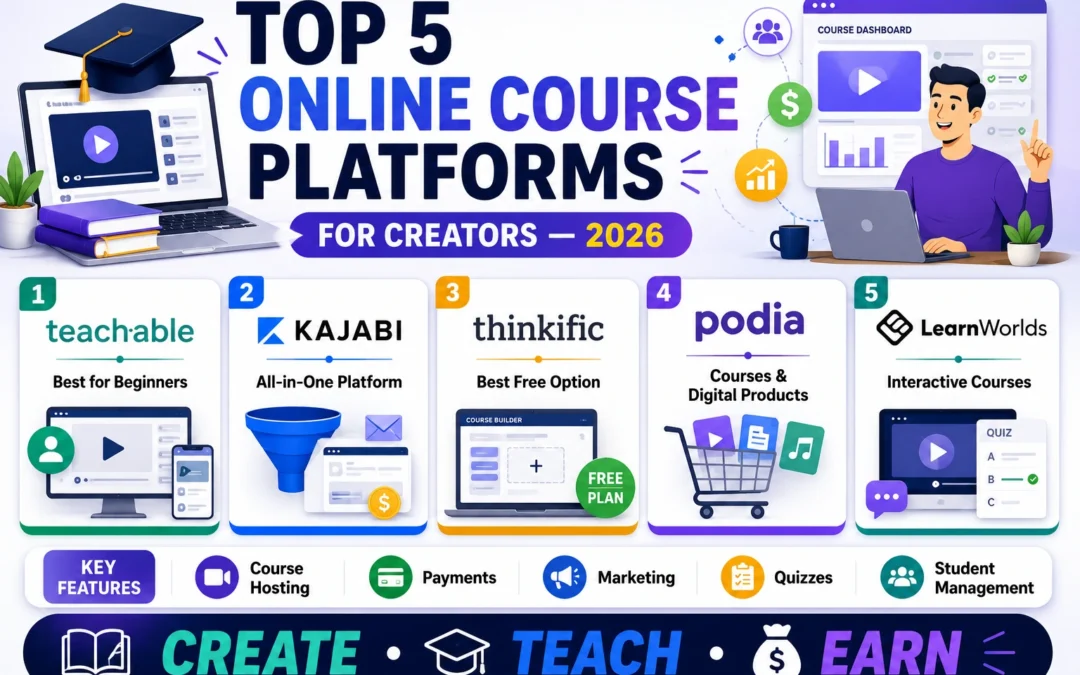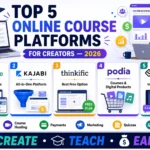
Turning genuine expertise into a structured, sellable online course used to require piecing together separate video hosting, payment processing, and student progress tracking tools manually, a genuinely significant technical barrier for creators who just wanted to teach something they knew well. Online course and LMS platforms have consolidated that entire process into one system, handling video hosting, quizzes, payment collection, and student communication together, letting a creator focus on the actual teaching content rather than the underlying technical infrastructure. In 2026, the strongest platforms in this category have also gotten better at built-in marketing tools, helping creators actually sell a course rather than just host it. Here are five online course platforms worth using this year. Most also support drip-feeding content on a schedule, releasing modules gradually rather than all at once, which tends to improve completion rates compared to dumping an entire course on...