SaaS application development has changed the way businesses use software. Earlier, companies had to install software on their local systems, manage updates, and maintain servers. Today, SaaS products allow users to access software through the internet from anywhere. For startups, indie developers, and internet entrepreneurs, SaaS is a powerful business model. It allows them to build one product and serve many customers while creating recurring revenue through monthly or yearly subscriptions. But building a SaaS product is not just about creating login screens and dashboards. A modern SaaS application should be reliable, secure, scalable, and easy to use. It should help users complete their work faster and with less confusion. Below are ten important features every modern SaaS application should have.
1. Simple and Secure User Authentication
Every SaaS product starts with user access. Users should be able to create an account, log in securely, reset passwords, and manage their profile without difficulty. Authentication should be simple for the user but strong from the technical side. Features like email verification, password reset, two-factor authentication, and social login can improve trust and security. For business-focused SaaS products, role-based login is also important. An admin, manager, staff member, and customer may all need different access levels. A good authentication system protects user data and gives the right people the right permissions.

2. Role-Based Access Control
Role-based access control is one of the most important features in SaaS application development. Not every user should see every screen or perform every action. For example, in a project management app, the owner may create projects, managers may assign tasks, and team members may only update task status. In a healthcare SaaS platform, doctors, nurses, admins, and patients may all need different access levels. This feature helps maintain security and order inside the application. It also makes the product more suitable for businesses because companies usually have multiple teams and user types.
3. Clean and User-Friendly Dashboard
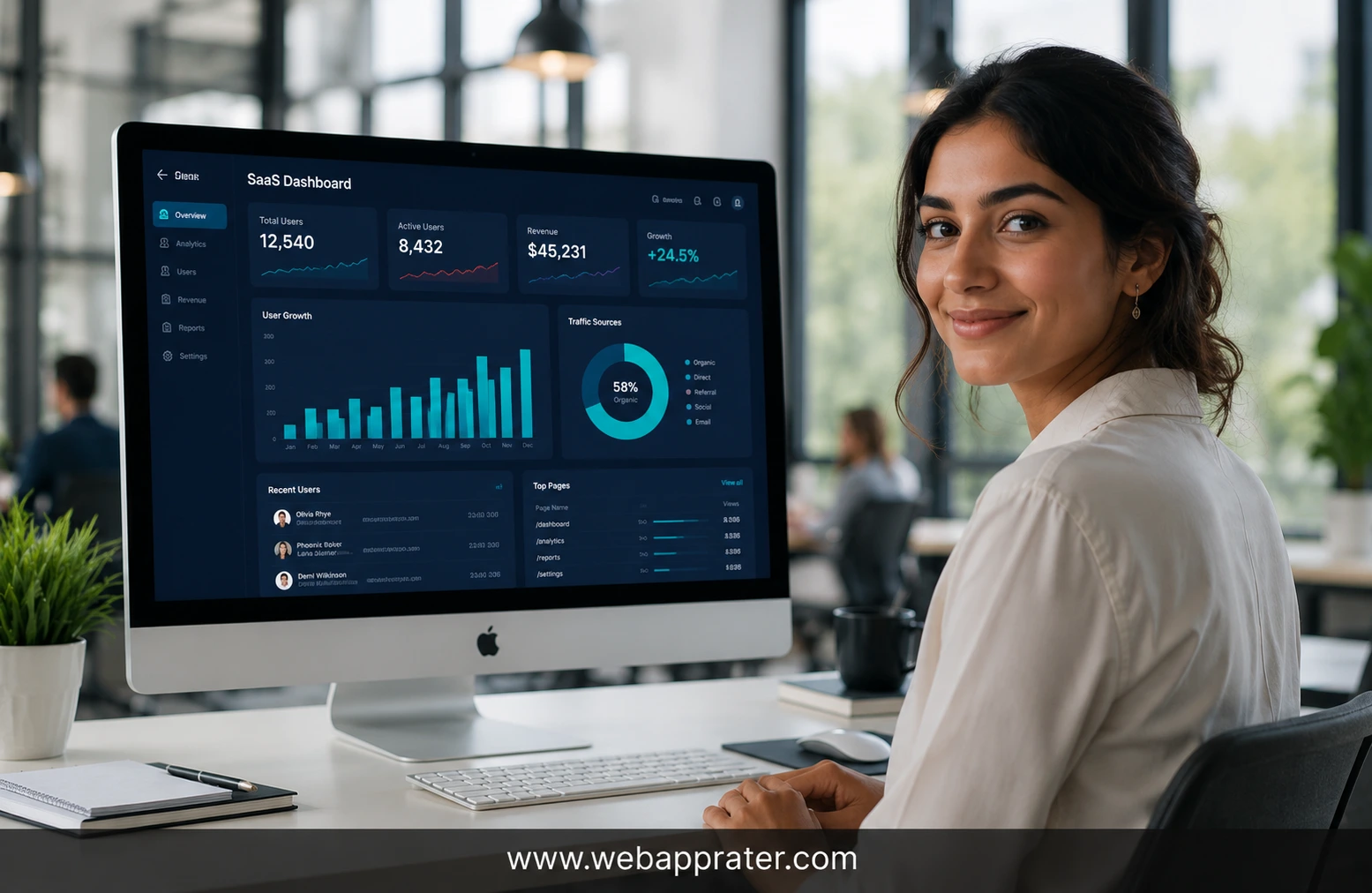
A dashboard is often the first screen users see after login. It should give users a clear overview of what is happening inside the application.A good dashboard does not show too much information. It shows the most useful data first — charts, quick actions, alerts, recent activity, and important numbers. The dashboard should help users take action quickly.
4. Subscription and Billing Management
Most SaaS products depend on subscription revenue. So billing management is a key feature. The application should support pricing plans, free trials, upgrades, downgrades, invoices, payment history, and renewal reminders.Billing should be smooth and transparent. Users should clearly understand what they are paying for. A confusing billing process can reduce trust and increase cancellations. For early-stage products, billing can start simple — but as the product grows, a proper subscription system becomes very important.
5. API-First Architecture
Modern SaaS products rarely work alone. They need to connect with other tools, mobile apps, websites, CRMs, payment gateways, email platforms, and third-party services. This is why API-first development is important. An API-first approach means the backend is designed so that other systems can easily communicate with it. This helps developers build web apps, mobile apps, admin panels, and integrations around the same core system.
6. Notifications and Alerts
Notifications help users stay updated. A SaaS application should inform users when something important happens through email, SMS, push notifications, WhatsApp, or in-app alerts. Notifications should be useful, not irritating. A task management app may notify users when a task is assigned. A finance app may alert users about payment due dates. A healthcare app may remind patients about appointments. Users should also be able to control their notification preferences.
7. Analytics and Reporting
Businesses use SaaS products not only to complete tasks but also to understand performance. Reports may include sales performance, user activity, revenue trends, task completion, customer behavior, or operational efficiency. Good reports help users make better decisions. They also increase the value of the SaaS product because users begin to depend on it for business insights. For software companies building SaaS platforms, reports should be planned carefully from the beginning so the system collects data in a structured way.
8. Security and Data Protection
Security is not optional in SaaS application development. Users trust the platform with their business data, customer data, financial data, or personal information. A secure SaaS application should include encrypted communication, secure password storage, access control, input validation, audit logs, data backups, and regular security updates. In industries like healthcare, finance, and education, security becomes even more important.
9. Scalability for Future Growth
A SaaS product may start with a few users, but the goal is usually to grow. The application should be built in a way that can handle more users, more data, and more activity over time. Scalability depends on many factors, including database design, server infrastructure, caching, background jobs, file storage, and code structure. The architecture should not block future growth. If the product becomes successful, the system should be able to expand without needing a complete rebuild.

10. Easy Onboarding and Help Support
Many SaaS products fail because users do not understand how to use them. Even if the product is powerful, users may leave if the first experience is confusing.A good SaaS application should include simple onboarding welcome screens, product tours, sample data, tooltips, help articles, videos, and chat support. The goal is to help users get value quickly. When users understand the product in the first few minutes, they are more likely to continue using it.
Conclusion
SaaS application development is a great opportunity for indie developers, startups, and software companies. But success depends on more than just building features. A good SaaS product should be secure, scalable, easy to use, and useful in daily business operations.
Features like authentication, role-based access, dashboards, billing, APIs, notifications, analytics, security, scalability, and onboarding form the foundation of a modern SaaS platform. Every SaaS idea begins with a problem. When that problem is solved with clear design, strong technology, and simple user experience, it can become a valuable software product.