Posting consistently across several social platforms, each with its own timing quirks and content format expectations, quickly becomes a genuinely unsustainable manual task for a small business owner already juggling everything else the business needs. Social media management web apps solve this by letting a business schedule and queue content across multiple platforms in advance from one dashboard, while also consolidating engagement and basic analytics so a business isn’t logging into five separate apps just to see how a post performed. In 2026, the strongest platforms in this category have also added genuinely useful AI-assisted caption writing and optimal posting time suggestions based on when a specific audience is actually most active. Here are five social media management web apps worth using this year. Most also offer a browser extension or mobile app for capturing content ideas on the go, so a good post idea doesn’t get forgotten before it’s actually scheduled.
Buffer

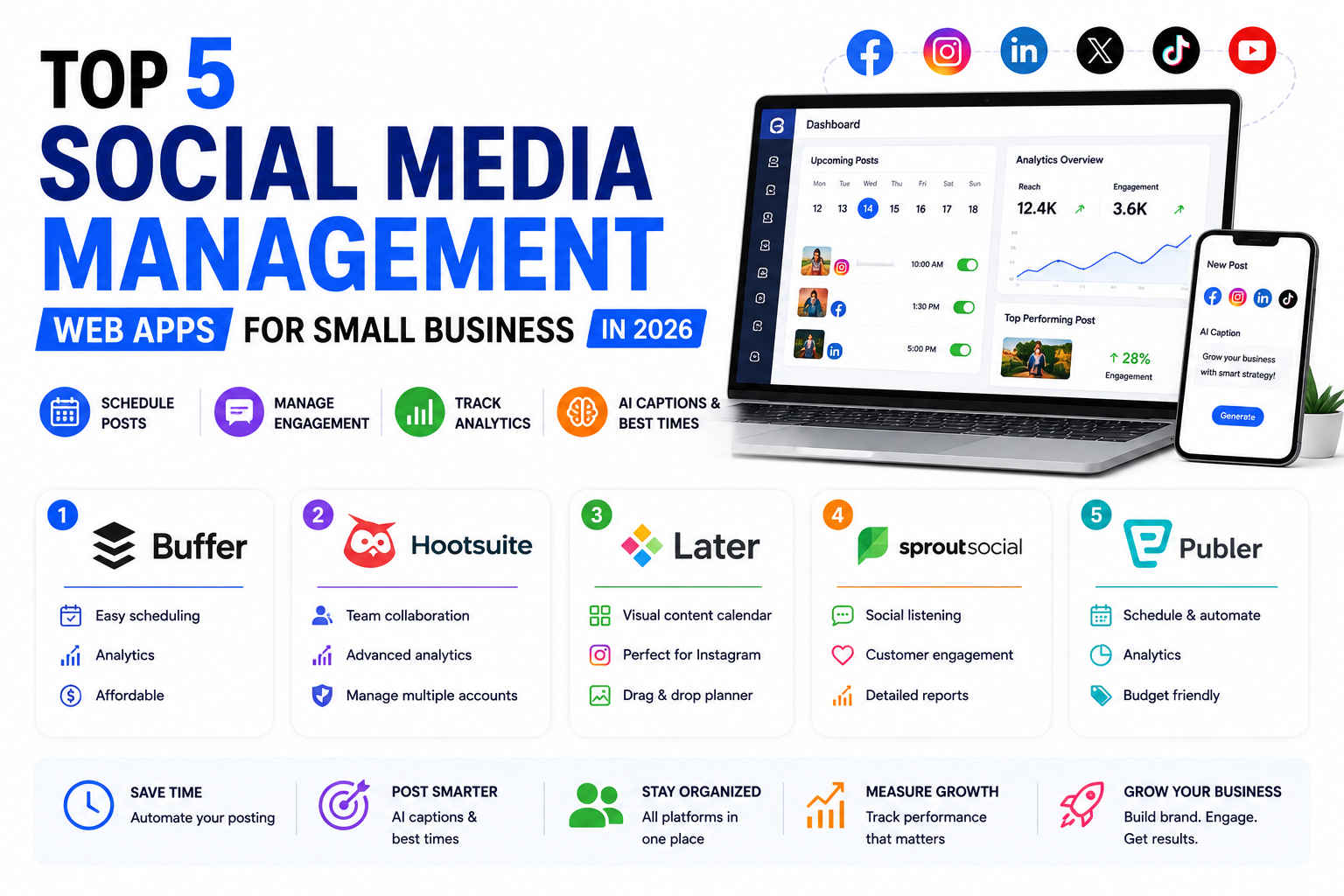
Buffer keeps its interface deliberately simple and affordable, offering solid scheduling and basic analytics across major platforms, making it a comfortable starting point for small businesses not yet needing enterprise-level features.
🔗 Download on Play Store | buffer.com
Hootsuite

Hootsuite offers genuinely deeper analytics and team collaboration features suited to businesses managing several social accounts across a small team, with a more comprehensive dashboard than lighter, more streamlined competitors.
🔗 Download on Play Store | www.hootsuite.com
Later

Later specializes specifically in visual content planning, with a genuinely useful drag-and-drop calendar for Instagram and TikTok specifically, appealing to businesses whose social strategy leans heavily on visually planned feeds.
🔗 Download on Play Store | later.com
Sprout Social
Sprout Social combines scheduling with genuinely detailed social listening and customer engagement tools, appealing to businesses that treat social media as a real customer service channel rather than purely one-way broadcasting.
Publer
Publer offers genuinely competitive pricing with solid core scheduling and analytics features, making it a strong value option for budget-conscious small businesses that don’t need every advanced feature larger platforms bundle in.
Existing team size and specific platform priorities should guide the choice more than feature lists alone. Solo business owners or very small teams just starting to formalize their social media presence get the most approachable entry point from Buffer or Publer’s simpler, more affordable interfaces. Businesses whose visual brand and feed aesthetic genuinely matters, common for retail or lifestyle brands, benefit specifically from Later’s visual planning tools over a more generic scheduling dashboard. Businesses receiving a genuine volume of customer questions or comments through social media should weigh Sprout Social’s engagement and listening tools more heavily, since treating social media as a real support channel requires different tooling than pure content scheduling. Larger small businesses managing several accounts across a growing team benefit from Hootsuite’s deeper collaboration and permission features that simpler tools don’t offer. It’s also worth reviewing whichever platform’s actual analytics dashboard directly before committing, since the depth and clarity of performance reporting varies more between these tools than the scheduling functionality itself does.
Consistent social media presence stops being sustainable as a manual daily task the moment a business is juggling more than one or two platforms seriously. Match the platform to your team size and how central visual content or customer engagement is to your specific social strategy, and reclaiming those daily manual posting minutes pays for the subscription many times over across a busy month. Consistency, far more than any single viral post, is usually what actually builds a small business’s social following over time.