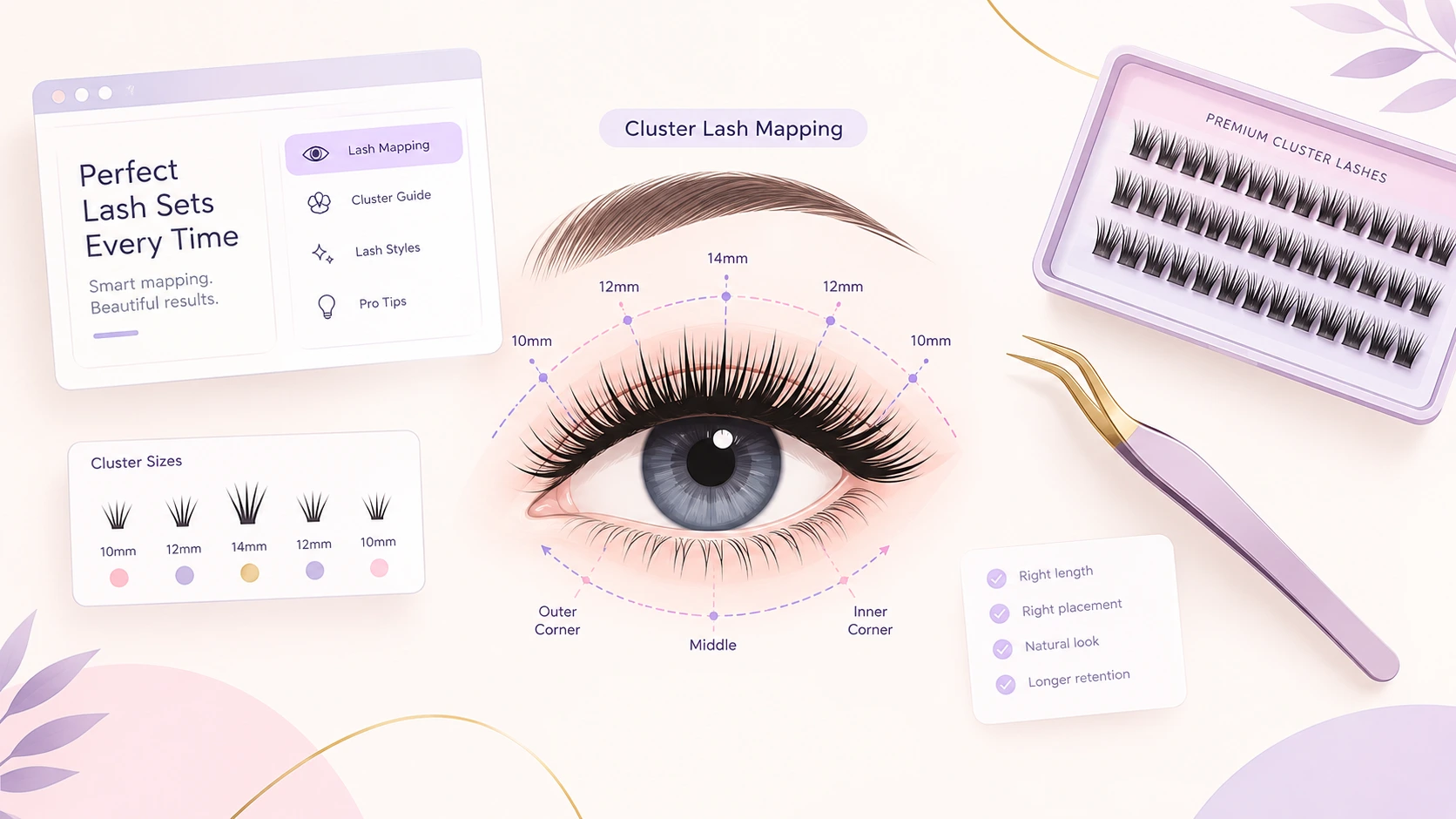
If you’ve ever sat in front of a mirror with a tray of cluster lashes and no real plan for where each length should go, you already know the problem Lash Map Lab is solving. Cluster lash application looks simple in tutorial videos, but the moment you’re holding the tweezers yourself, the guesswork sets in — which length goes at the inner corner, how many clusters you actually need, and whether your chosen style will suit your eye shape at all. Lash Map Lab, a free web-based planning tool at lashmaplab.com, tackles this exact gap, and it does it well.
What It Actually Does
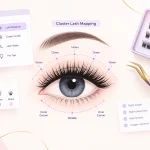
At its core, Lash Map Lab is a mapping tool. You start by selecting an eye-shape guide, then pick a lash style, enter the lengths available in your tray, and set your cluster count. From there, the tool generates a customizable map you can edit lash-by-lash before downloading or sharing the finished layout. It sounds simple when you describe it in a sentence, but the value shows up in the details — being able to adjust individual lash lengths rather than accepting a generic template is what separates this from the printable PDF charts that circulate on lash forums.
No Account, No Uploads, No Friction
One of the most refreshing things about this tool is what it doesn’t ask of you. There’s no account creation, no email gate, and no photo upload required to get a working map. Everything runs directly in the browser, and according to the site, your data stays on your device rather than being sent off to a server somewhere. For a tool in the beauty and personal-care space, that’s a meaningful design choice. A lot of apps in this category ask for a selfie or a login before they’ll do anything useful; Lash Map Lab skips that entirely and still delivers a usable, personalized result. It respects the user’s time and privacy in a way that feels intentional rather than accidental.
Built for the Person Who Actually Does This
What stands out most is that Lash Map Lab feels like it was built by someone who understands the actual workflow of applying cluster lashes, not just someone building a generic configurator. The eye-shape-first approach is a smart entry point, since so much of lash styling advice hinges on shape compatibility anyway. Letting users input the specific lengths already in their tray — rather than assuming a “standard” set — acknowledges that most people doing this at home are working with whatever kit they have on hand, not a curated professional set.
The ability to fine-tune individual lash lengths after the initial map is generated is where the tool earns its keep. Anyone who’s used a rigid, one-size-fits-all lash chart knows the frustration of a “guide” that doesn’t actually match your lash line. Lash Map Lab treats the generated map as a starting point rather than a final answer, which is exactly how a real mapping tool should behave.
Practical, Shareable Output
Once you’re happy with the map, you can download or share it — a small feature that matters more than it sounds. Lash mapping isn’t always a one-sitting task; you might build a map, save it, and come back to it before your next application, or send it to a friend who’s helping you apply lashes for an event. Having a clean, exportable version of your plan means you’re not rebuilding it from scratch every time or relying on a screenshot of a half-finished layout.
Who This Is For
Lash Map Lab is clearly aimed at the DIY lash community — people doing cluster lashes at home rather than in a salon setting — but the logic behind it would be just as useful to lash techs looking to pre-plan a client’s layout before an appointment. Because it’s entirely free and browser-based, there’s zero barrier to trying it out, which makes it an easy recommendation regardless of skill level. Beginners get a structured starting point instead of guessing blind, and more experienced users get a fast way to formalize a map they’d otherwise be sketching out manually. You can try the tool directly at lashmaplab.com without signing up for anything.
The Verdict
Lash Map Lab succeeds because it solves a real, specific problem without over-engineering the solution. It’s fast, free, private by design, and built around how people actually approach cluster lash application rather than how a generic SaaS template might assume they do. No accounts, no uploads, no unnecessary steps — just a clear path from “I have a tray of lashes and no plan” to “here’s my map.” For anyone who applies their own lashes even occasionally, it’s worth bookmarking.