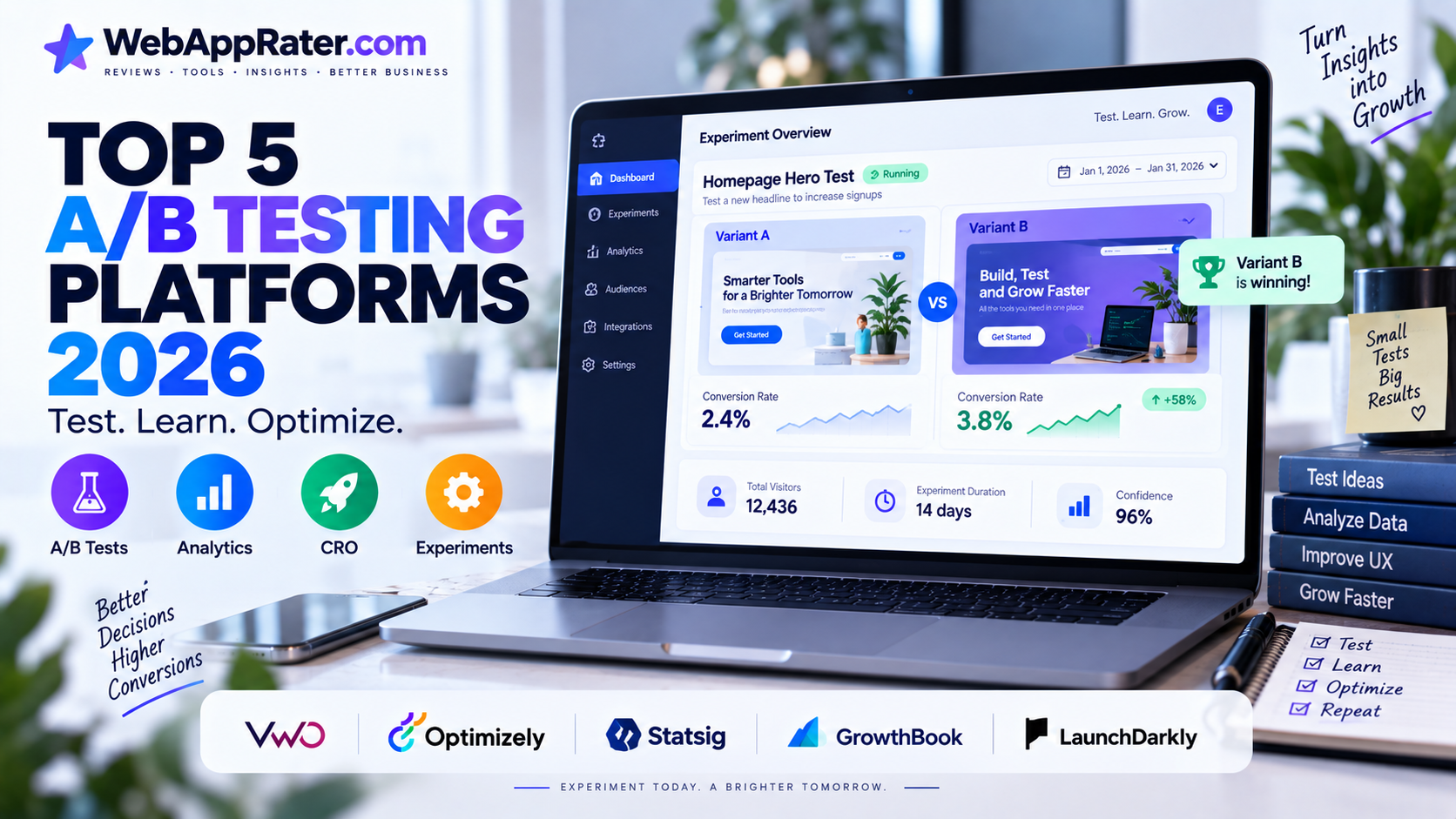
A/B testing solves a genuinely simple problem well: rather than redesigning a page based on a hunch, split traffic between two versions and let real user behavior determine which one actually performs better. The data backs up why this matters, with research from CRO Agency Growth Lab finding companies running more than 25 experiments per quarter see 63 percent higher year-over-year revenue growth than those running fewer than five. The category splits cleanly into client-side visual editors built for marketers, and server-side, SDK-first platforms built for engineering teams, a distinction worth understanding before picking a tool. One important note: Google Optimize was formally sunset in September 2024, so any guide still recommending it is out of date. Here are five platforms worth knowing in 2026.
VWO
VWO remains the strongest client-side, marketer-friendly platform, combining a visual no-code editor with integrated heatmaps and session recordings in a single tool, removing the need to pay for a separate behavioral analytics product alongside pure testing. Its Bayesian-powered SmartStats engine presents results as intuitive probabilities, a 92 percent chance variant B beats control, rather than raw p-values, letting teams monitor results continuously without the statistical penalty a strict frequentist approach imposes. For marketing and CRO teams running website tests without dedicated engineering support, it remains the operator default across a wide range of company sizes.
Optimizely
Optimizely remains the enterprise leader for large-scale conversion optimization programs, offering mature workflow, governance, and approval features that matter considerably for large organizations with multiple stakeholders needing sign-off before a test goes live. Its Feature Experimentation product extends beyond simple web testing into product-level experimentation, competing directly with engineering-first platforms like Statsig and LaunchDarkly for teams that need both marketing and product testing under one roof. Its frequentist statistical approach requires committing to a sample size upfront, more rigid than a Bayesian alternative but well understood and conservative, which matters for enterprise teams that need defensible, auditable test methodology.
Statsig
Statsig, built by former Facebook infrastructure engineers, brings the statistical techniques that power experimentation at major tech companies, including CUPED variance reduction and sequential testing, to companies of any size through an SDK-first, engineering-led platform. Its sequential testing approach reached statistical significance considerably faster than a traditional frequentist platform in head-to-head comparisons, a genuine advantage for lower-traffic products that would otherwise wait weeks for a confident result. For product and engineering teams running 20 or more experiments a month who are comfortable with code-based variations, it remains one of the most technically sophisticated options available.
GrowthBook
GrowthBook stands out specifically as the leading free, open-source option, covering roughly 80 percent of what paid platforms offer for teams technical enough to self-host and manage the infrastructure themselves. Its feature flag and experimentation combination appeals directly to engineering-led teams that want full control and zero recurring licensing cost, trading some of the polish and support of a fully managed platform for genuine cost savings and data ownership. For budget-conscious technical teams building their own experimentation program from the ground up, it remains the clearest starting point before committing to a paid platform.
LaunchDarkly rounds out a strong fifth option specifically for enterprise engineering teams that need robust feature flag management at scale, though its experimentation depth trails dedicated platforms like Statsig or Optimizely, making it a stronger fit for teams whose primary need is safe feature rollout rather than rigorous statistical experimentation. Choosing among these platforms largely comes down to whether a marketing or an engineering team owns the testing program: marketing and CRO teams running no-code web tests should default to VWO or Optimizely Web, while product and engineering teams comfortable with code-based variations should look toward Statsig or GrowthBook. Independent research on tool selection is consistent on one point worth remembering: tool choice accounts for a relatively modest share of experimentation outcomes, with operator skill and consistent testing volume mattering considerably more than which specific platform gets chosen.
Conclusion
A/B testing and experimentation platforms have become genuine competitive infrastructure rather than a nice-to-have marketing extra, given how clearly the data ties consistent experimentation volume to measurable revenue growth. Whichever of these five ends up fitting a team’s technical capability and budget, the underlying goal remains the same: replacing hunches about what will work with real, measured evidence from actual user behavior.