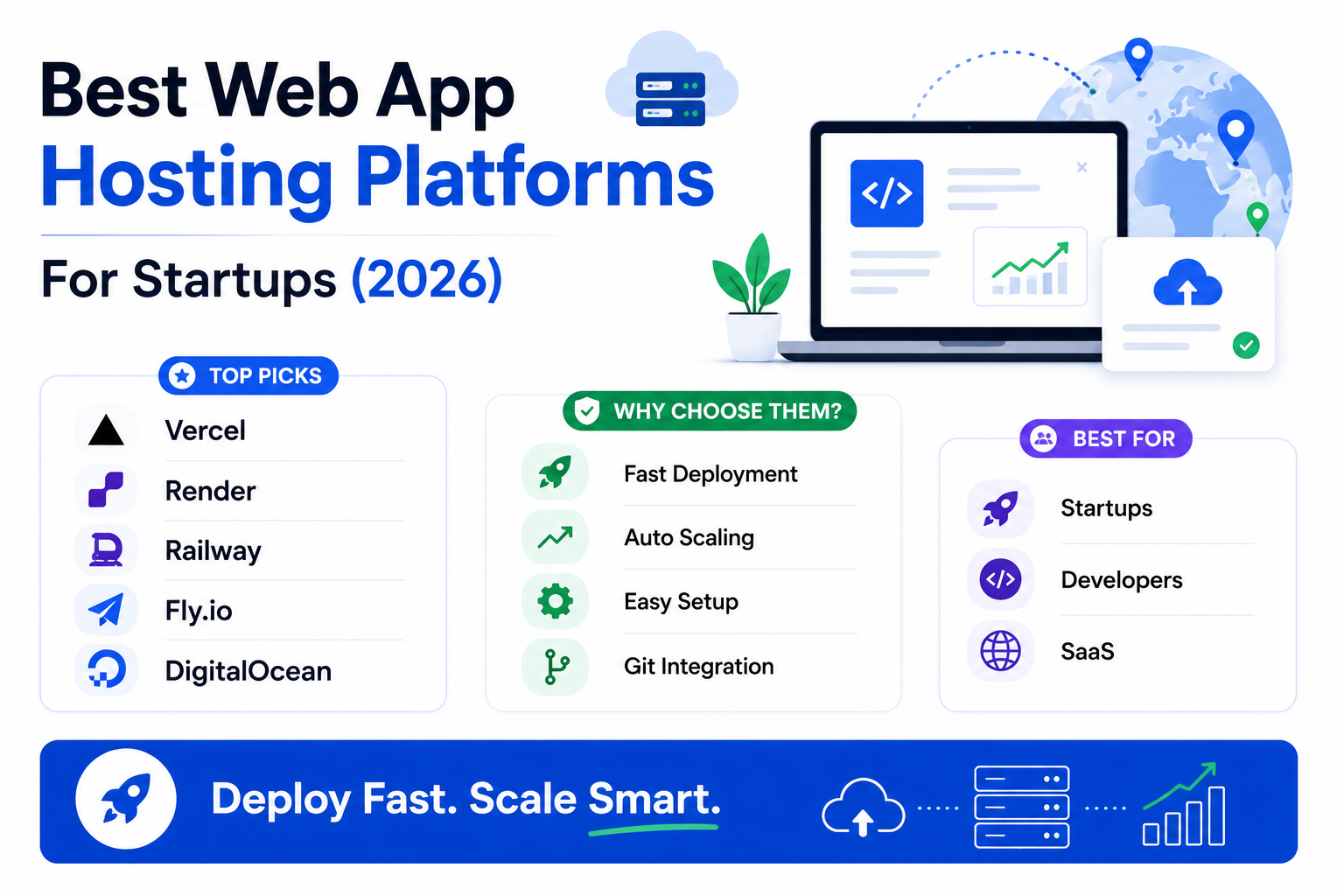
Early-stage startups need hosting that’s genuinely simple to deploy on, scales without requiring a dedicated infrastructure engineer, and doesn’t demand a large upfront commitment before the product has found real traction. The hosting landscape has shifted considerably toward developer-friendly platforms that handle much of the underlying infrastructure complexity automatically, letting small teams focus on building the actual product rather than managing servers. Getting this choice right early avoids a genuinely painful migration later once the product has real users depending on consistent uptime. Here are five web app hosting platforms worth considering for startups in 2026, each with a genuinely different balance of simplicity, control, and cost.
Vercel
Vercel has become the default choice for many startups building with modern JavaScript frameworks, offering genuinely seamless deployment straight from a Git repository along with strong performance optimization built in automatically without manual configuration.
Render
Render offers a genuinely simple deployment experience covering web services, databases, and background workers within a single dashboard, appealing to startups that want more infrastructure flexibility than Vercel without the complexity of raw cloud provider consoles.
Railway

Railway focuses heavily on developer experience, with a genuinely intuitive interface for provisioning databases and services alongside your app, making it a popular choice for small teams that want infrastructure to feel less intimidating.
Fly.io
Fly.io lets startups deploy applications genuinely close to their users across a global network of regions, appealing specifically to products where latency and geographic distribution matter more than the simplest possible setup.
DigitalOcean App Platform
DigitalOcean’s App Platform offers a genuinely reasonable middle ground between full infrastructure control and managed simplicity, with transparent, predictable pricing that appeals to startups wary of the potentially unpredictable bills larger cloud providers can generate.
Avoiding Early Infrastructure Mistakes
The most common early-stage mistake isn’t choosing the wrong platform outright, it’s over-engineering infrastructure before the product has real users, spending precious early weeks on scalability nobody needs yet instead of shipping and learning from actual customer feedback. Platforms like Vercel and Render are specifically designed to scale automatically as traffic genuinely grows, which means a startup can start simple and let the platform handle increased load rather than needing to re-architect everything once growth actually happens. It’s also worth factoring in realistic cost projections at meaningfully higher usage levels before committing, some platforms that look attractively cheap at low traffic can become surprisingly expensive once a startup actually finds product-market fit and usage scales up considerably.
The right hosting platform for a startup is ultimately the one that lets a small team ship quickly without becoming a distraction from building the actual product customers care about. Vercel and Render both offer genuinely strong starting points for most web applications, while Fly.io is worth considering specifically if your product has real geographic distribution needs from day one rather than serving a single regional market. Whichever platform you choose, set up basic uptime monitoring from day one too, catching an outage before a customer reports it makes a genuinely better first impression. A five-minute setup for alerts can save considerable reputational damage compared to finding out about downtime from an angry user instead. Most hosting platforms offer this monitoring built in or through simple free third-party integrations, so there’s genuinely little excuse to skip it, and the peace of mind alone is worth the small setup time investment.