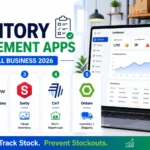
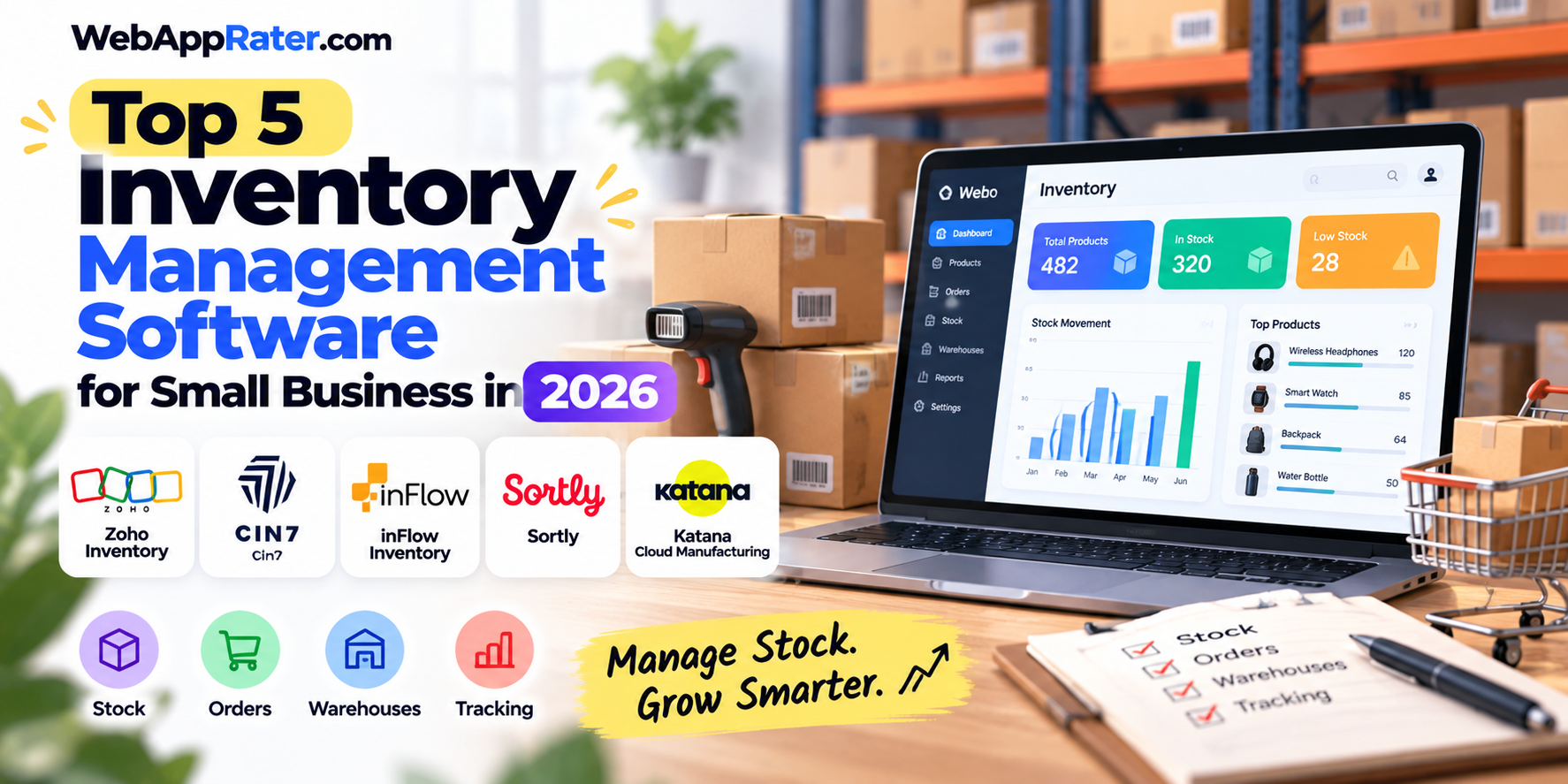
A spreadsheet works reasonably well for tracking inventory right up until a business starts selling across more than one sales channel, at which point keeping stock counts accurate across a website, a marketplace listing, and a physical store becomes genuinely unmanageable by hand. Inventory management software solves this by syncing stock levels automatically across every sales channel in real time, preventing the genuinely costly problem of overselling an item that’s already sold out elsewhere. Here are five platforms worth knowing in 2026.
Zoho Inventory
Zoho Inventory remains one of the most accessible entry points into the category, offering a genuinely usable free tier for small businesses with modest order volume, alongside seamless integration with the broader Zoho software ecosystem for businesses already using Zoho for accounting or CRM. Its multi-channel selling support covers major marketplaces and its own storefront, syncing stock levels automatically to prevent overselling across channels. For small businesses just starting to outgrow a spreadsheet and wanting a low-cost, low-commitment entry point, it remains one of the most approachable options available.
View on Play Store | View on App Store
Cin7
Cin7 has built its reputation specifically around genuinely complex, multi-warehouse and multi-channel inventory needs, offering advanced demand forecasting and integrated order management that larger small businesses and mid-sized companies need once their operations span multiple physical locations. Its deep integrations with major e-commerce platforms and accounting software give growing businesses a genuinely unified operational picture rather than juggling separate disconnected systems. For businesses that have outgrown simpler inventory tools and need genuine multi-location, multi-channel sophistication, it remains one of the stronger options in the category.
inFlow Inventory
inFlow Inventory appeals specifically to small manufacturers and wholesalers, offering genuinely capable barcode scanning, purchase order management, and basic manufacturing features like bill-of-materials tracking that pure retail-focused inventory tools typically skip. Its straightforward, uncluttered interface makes it genuinely approachable for small business owners without dedicated inventory management staff, and its offline mode lets warehouse staff continue scanning and recording inventory movements even during an internet outage. For small manufacturers or wholesalers specifically needing basic production tracking alongside inventory counts, it remains a strong, focused choice.
View on Play Store | View on App Store
Sortly
Sortly, already well known for personal home inventory tracking, extends the same intuitive, visual folder-based organization to small business inventory management, trusted by more than 20,000 businesses for its combination of barcode scanning, low-stock alerts, and genuinely simple setup that doesn’t require dedicated training to use effectively. Its visual, photo-first approach to cataloging inventory items appeals specifically to businesses managing physical goods where a picture communicates an item’s condition or variant faster than a text description alone. For small businesses that want the fastest possible setup without a steep learning curve, it remains one of the more accessible options available.
View on Play Store | View on App Store
Katana Cloud Manufacturing rounds out a strong fifth option specifically for small manufacturers needing genuinely visual production planning tied directly to raw material inventory levels, giving manufacturers a real-time view of exactly how current stock constrains upcoming production runs. Choosing between these platforms mostly comes down to business type and scale: businesses just starting to outgrow a spreadsheet should default to Zoho Inventory’s accessible free tier, businesses with genuinely complex multi-warehouse operations should evaluate Cin7, small manufacturers and wholesalers should prioritize inFlow Inventory’s production-adjacent features, and businesses wanting the fastest, most visual setup should consider Sortly.
Conclusion
Inventory management software has become close to essential infrastructure for any small business selling physical goods across more than a single channel, since the alternative, manually reconciling stock counts across separate systems, virtually guarantees costly overselling errors eventually. Whichever of these five ends up fitting a business’s specific scale and product type, the underlying payoff remains the same: accurate, real-time stock visibility that a spreadsheet simply can’t sustain past a certain point of growth.